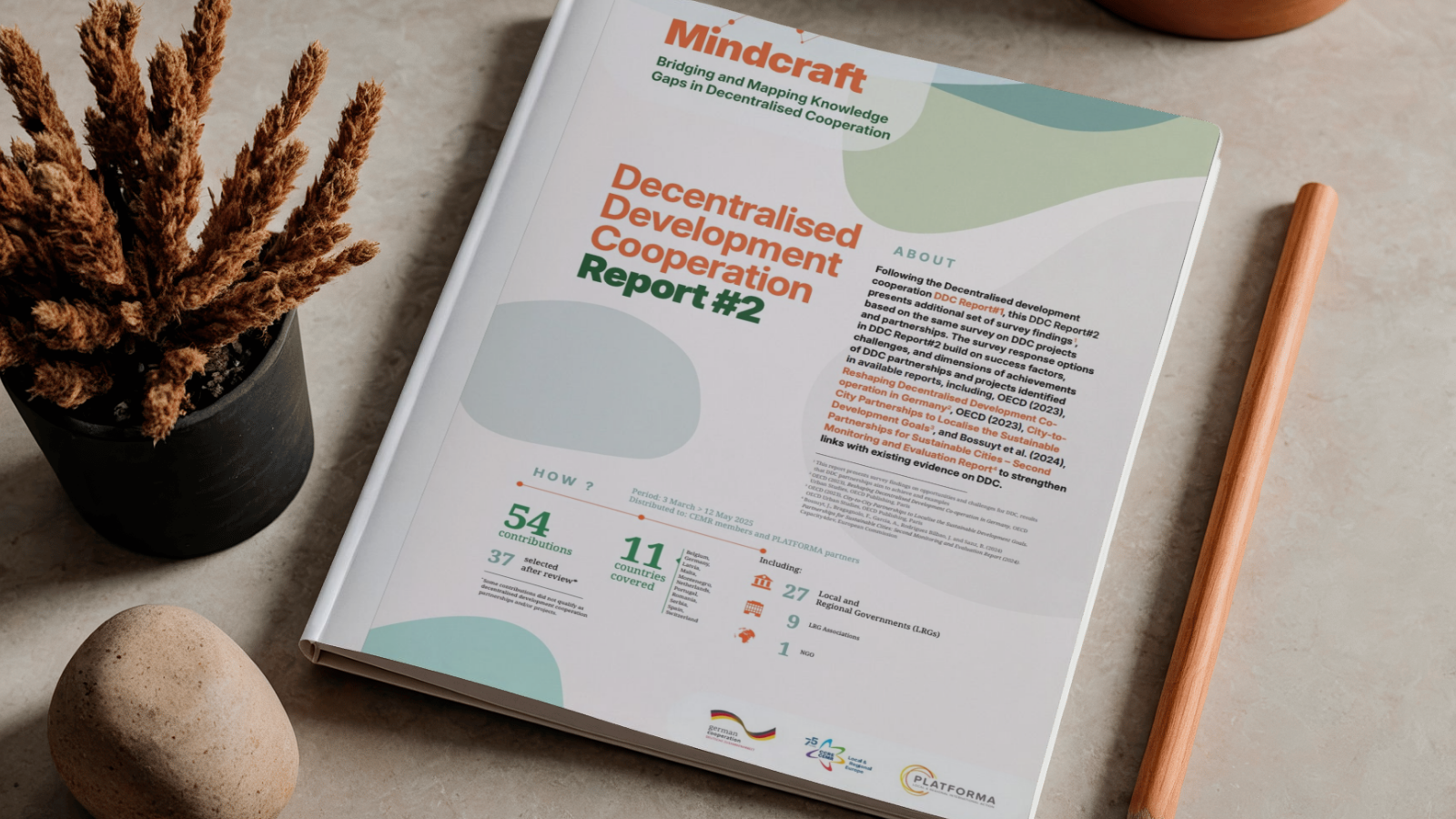
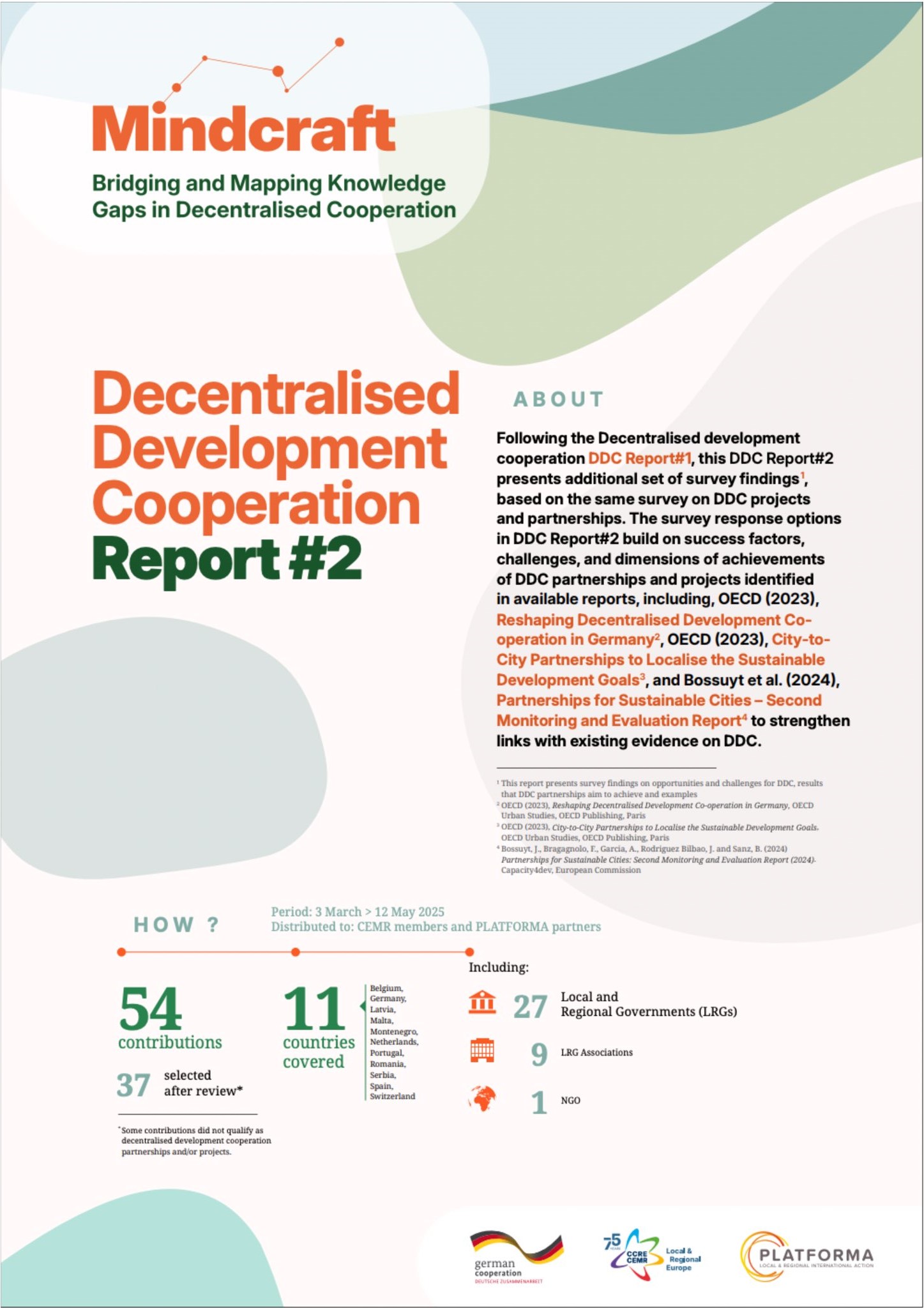
Decentralised Development Cooperation Report #2
Following the first Decentralised Development Cooperation Report (DDC Report #1), this second Report (DDC Report #2) draws on the same Europe-wide survey to continue offering a pan-European overview of how local and regional governments (LRGs), their associations, and civil society actors engage in international cooperation.
While DDC Report #1 presented a general overview of reported decentralised development cooperation (DDC), this second report digs deeper into the opportunities and challenges shaping decentralised cooperation and looks at the results that DDC partnerships aim to achieve. It also showcases a selection of DDC projects, offering illustrative examples of what effective partnerships and activities look like in practice.
This report is part of a wider series of Mindcraft publications on decentralised development cooperation, including Country Profiles on DDC frameworks. You can find the rest of Mindcraft’s publications here.
Read the full Mindcraft DDC Report #2, available in English, French, Spanish, and German.
Discover Mindcraft DDC Report #1 here.
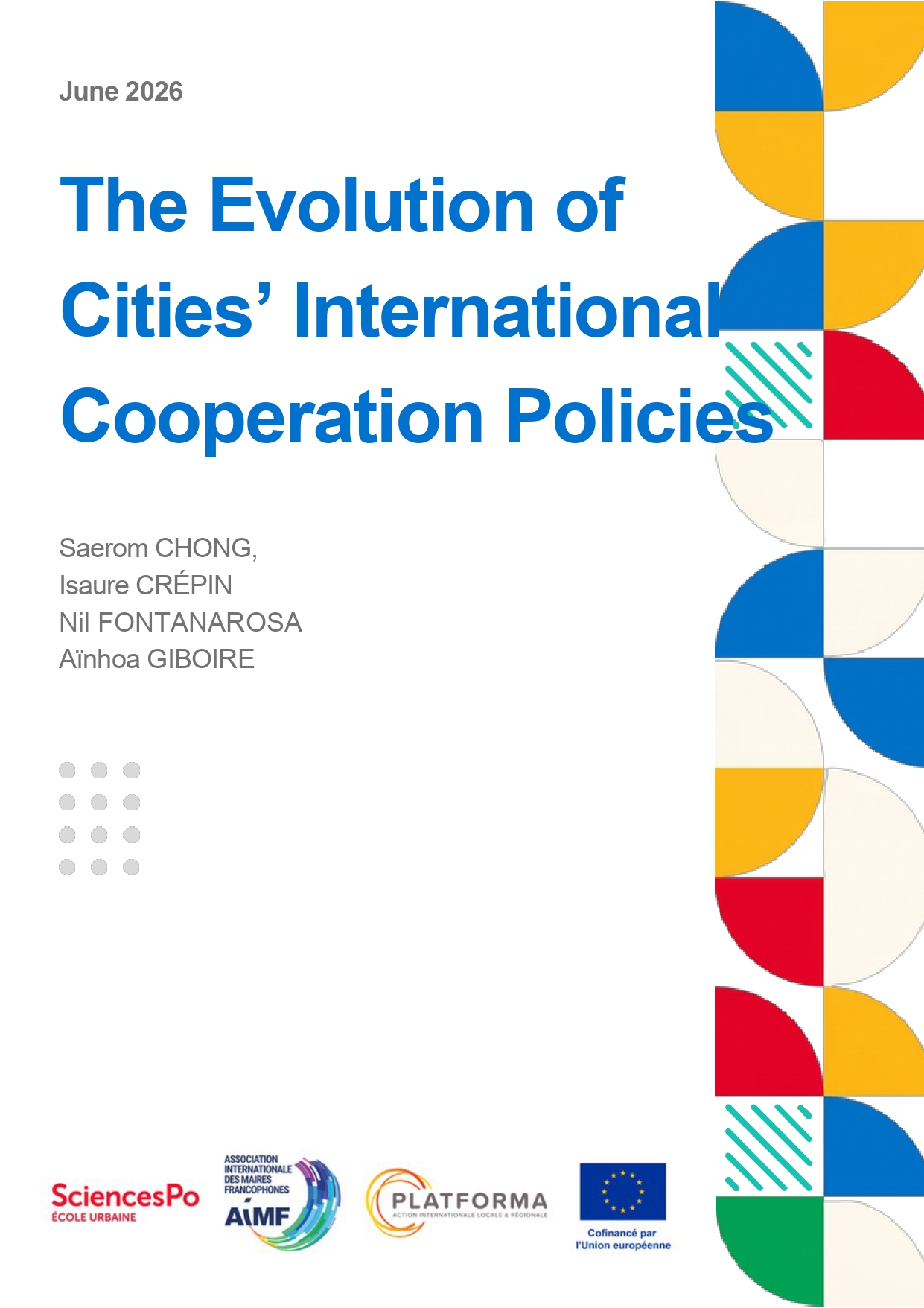
The Evolution of Cities’ International Cooperation Policies
International cooperation among cities has profoundly transformed local and global dynamics. This report, the result of a collaboration between AIMF, PLATFORMA, and Sciences Po’s Urban School, offers a unique analysis of this evolution, which we observe every day in our respective roles. It sheds light on the practices, concrete contributions, and levers for strengthening the impact of cities’ international action.
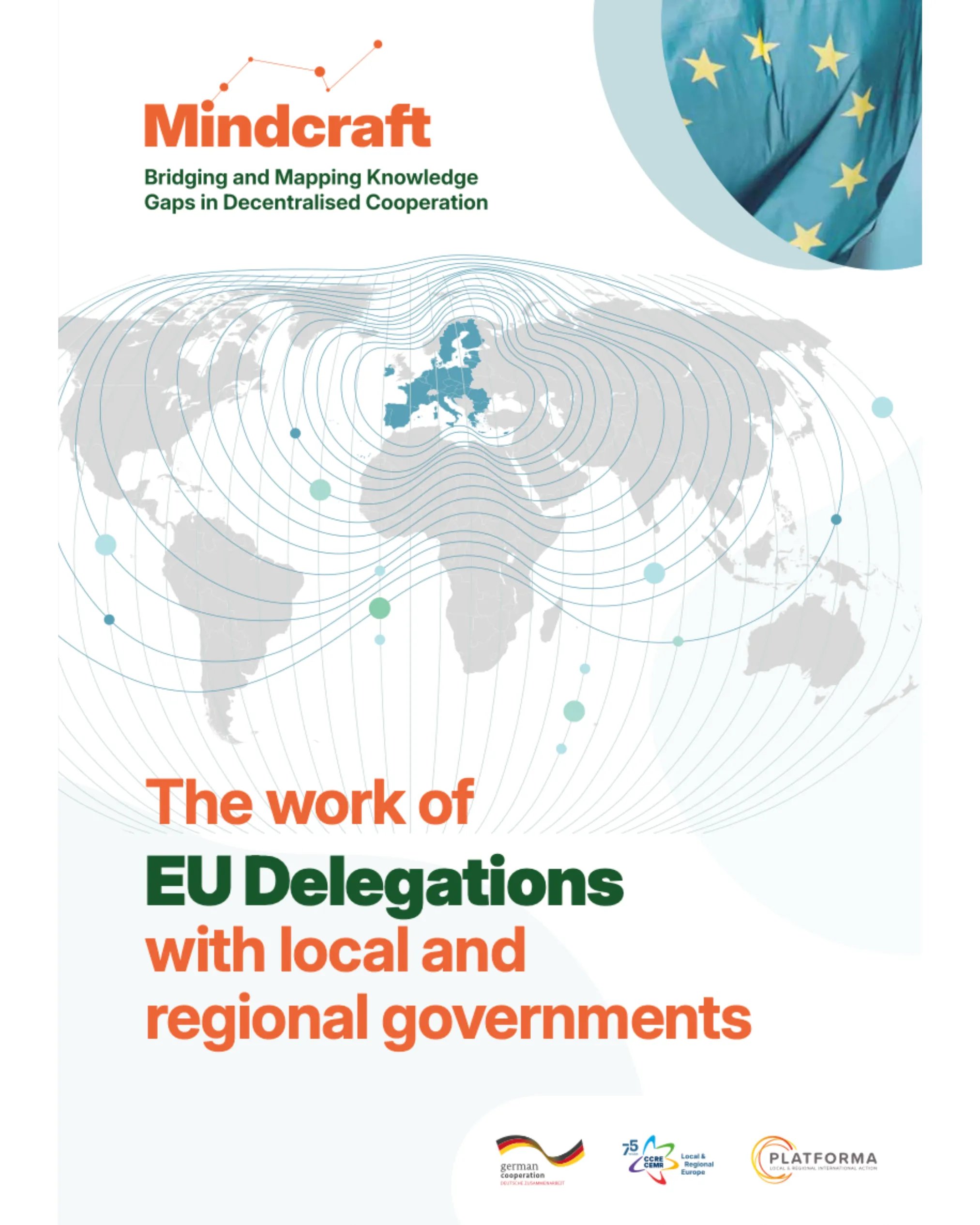
The work of EU Delegations with local and regional governments
This new study examines to what extent and how EU Delegations (EUDs) engage with Local and Regional Governments (LRGs) and their associations (LRGAs) in the partner countries. It is based on a 2025 survey of 40 EUDs worldwide and interviews with five of them in Chad, Guatemala, Madagascar, Nepal and Zambia, as well as additional exchanges with EU Member States development cooperation agencies.
It is a new Mindcraft publication, following on from the report published by PLATFORMA in 2021. Since then, the EU’s external action framework has undergone significant change. Under the Neighbourhood, Development and International Cooperation Instrument (NDICI) Global Europe and the Global Gateway strategy, EU international cooperation has moved towards a more geographic, investment-driven approach, with growing emphasis on the localisation of development cooperation.
Action Guide | Education for Citizenship and International Solidarity at the Heart of Local Governments’ International Action
This study aims to better understand the practical relationship between Education for Citizenship and International Solidarity (ECSI) and local governments’ international cooperation projects.
The goal? To identify existing practices, pinpoint areas for improvement, and propose courses of action to further embed ECSI in international cooperation.
This study was launched with the support of PLATFORMA a and the Delegation for Local Authorities and Civil Society (DCTCIV) of the French Ministry for Europe and Foreign Affairs, and conducted by the Interregional Conference of Regional Multi-Stakeholder Networks (CIRRMA).
This study is available only in French.
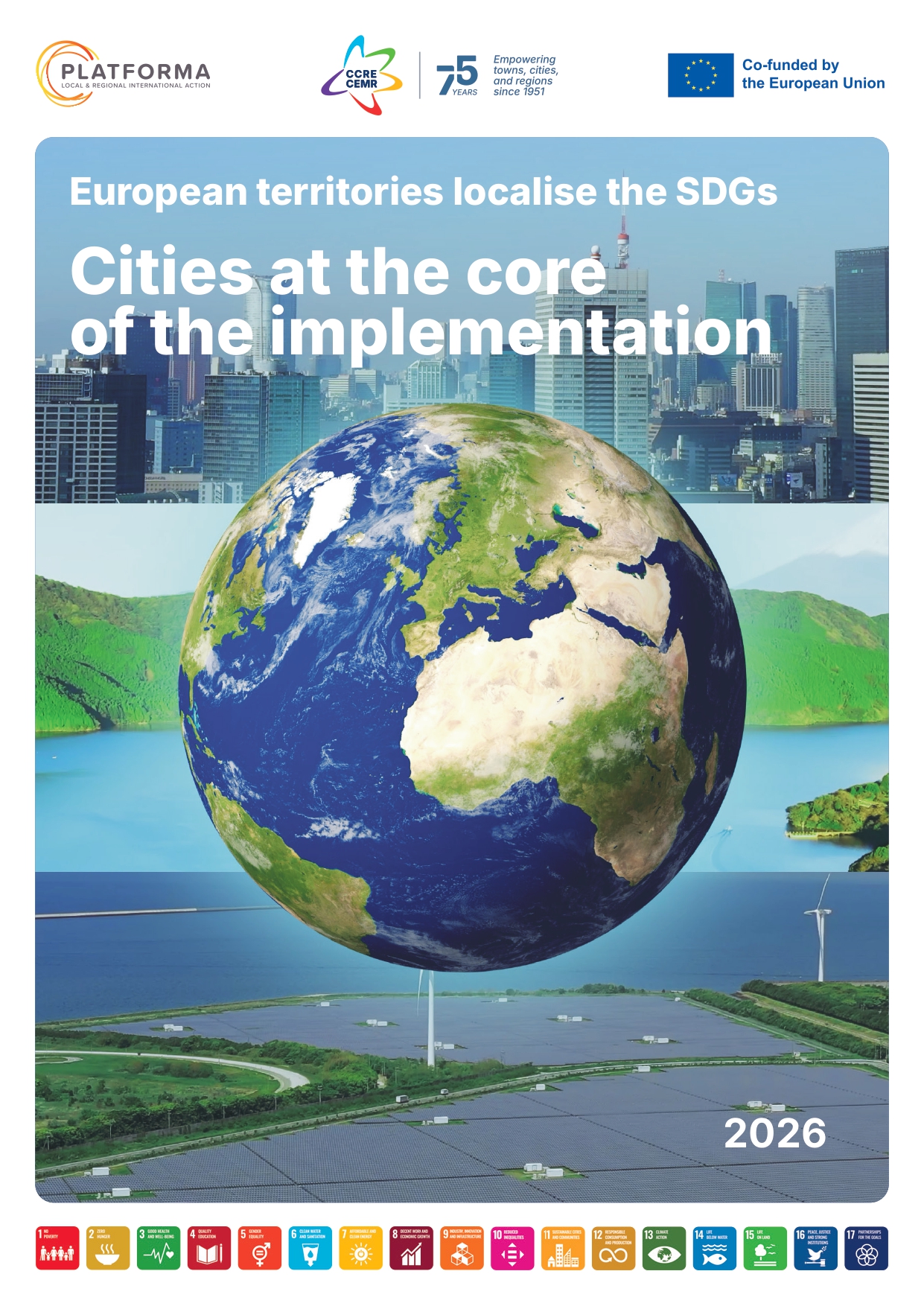
European territories localise the SDGs | Cities at the core of implementation
Discover the report online: European Territories Localise the SDGs or in PDF.
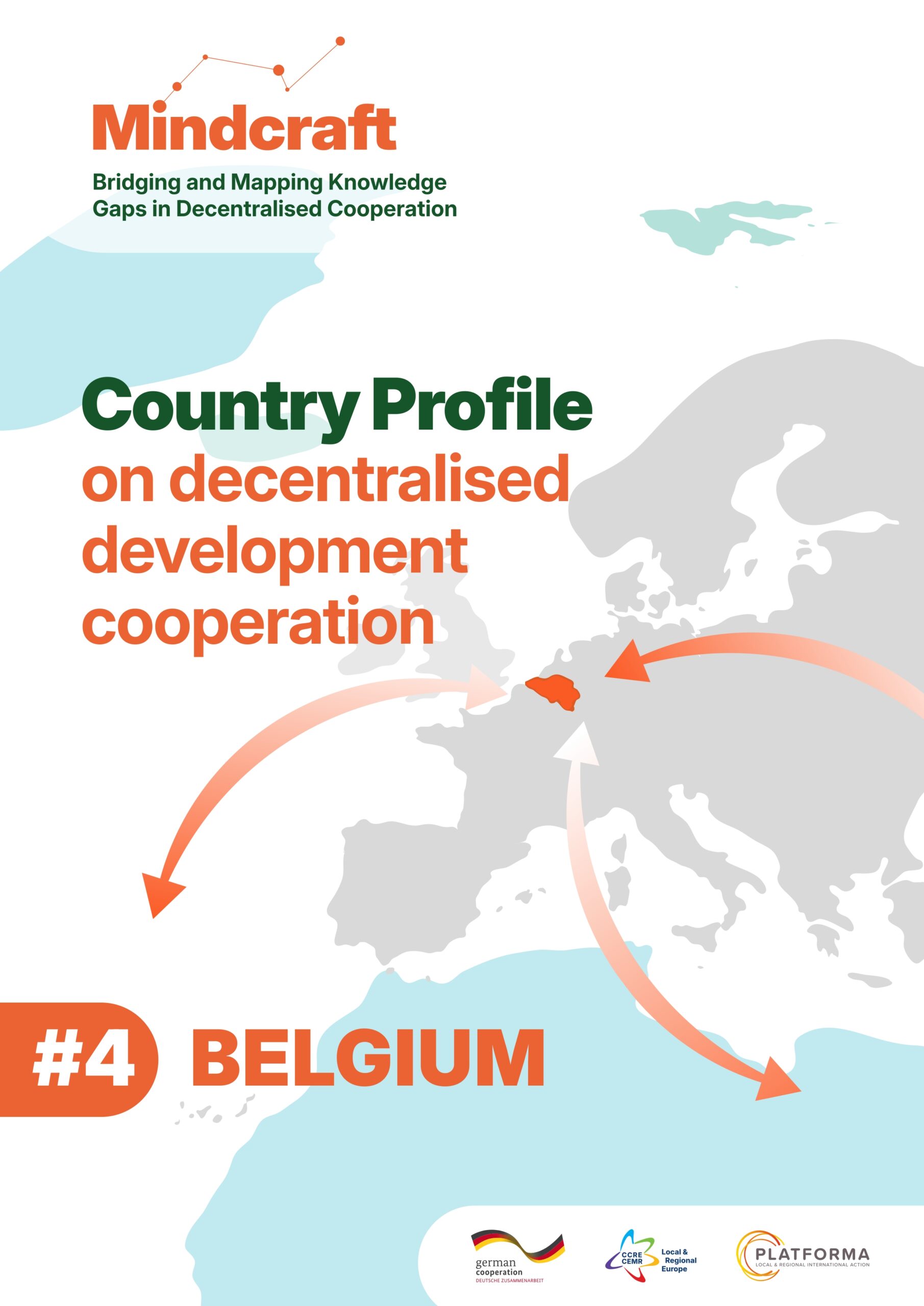
Country Profile on decentralised development cooperation: the case of Belgium
Where does Belgium stand when it comes to decentralised development cooperation (DDC)?
The country profiles offer a short overview of national models of decentralised development cooperation frameworks in selected EU Member States. The aim is to provide insights into specific mechanisms and modalities of analysed national frameworks and identify enabling factors as well as challenges related to practical implementation, focusing on the role and opportunities for local and regional governments and their associations.
Read the country profile of Belgium in English, French, German and Spanish.
This publication is produced within the Bridging and Mapping Knowledge Gaps in Decentralised Cooperation (Mindcraft), funded by the German Federal Ministry for Economic Cooperation and Development (BMZ) and supported by the Deutsche Gesellschaft für Internationale Zusammenarbeit (GIZ).
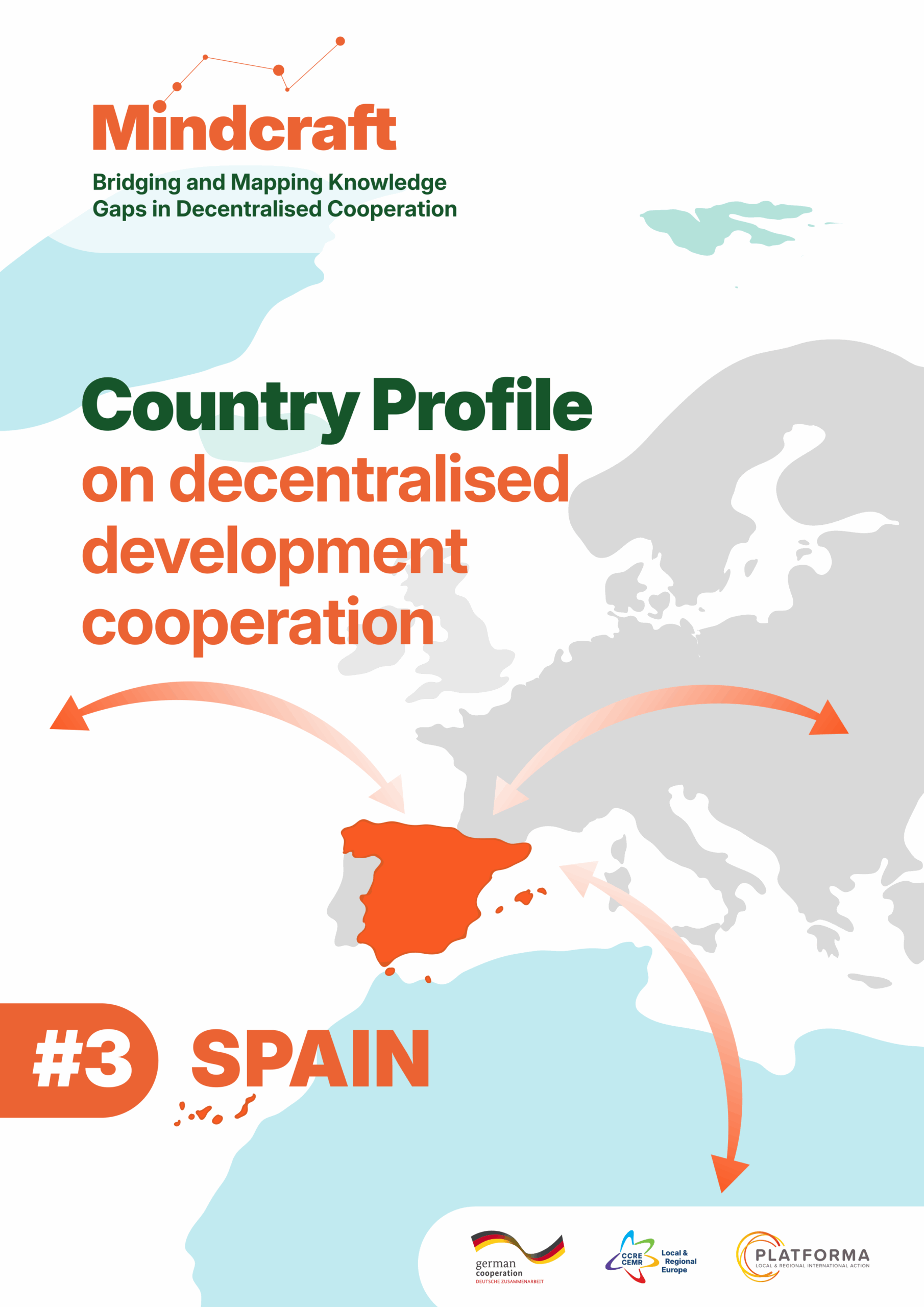
Country Profile on decentralised development cooperation: the case of Spain
Where does Spain stand when it comes to decentralised development cooperation (DDC)?
The country profiles offer a short overview of national models of decentralised development cooperation frameworks in selected EU Member States. The aim is to provide insights into specific mechanisms and modalities of analysed national frameworks and identify enabling factors as well as challenges related to practical implementation, focusing on the role and opportunities for local and regional governments and their associations.
Read the Country Profile of Spain in English, French, German, or Spanish.
This publication is produced within the Bridging and Mapping Knowledge Gaps in Decentralised Cooperation (Mindcraft), funded by the German Federal Ministry for Economic Cooperation and Development (BMZ) and supported by the Deutsche Gesellschaft für Internationale Zusammenarbeit (GIZ).
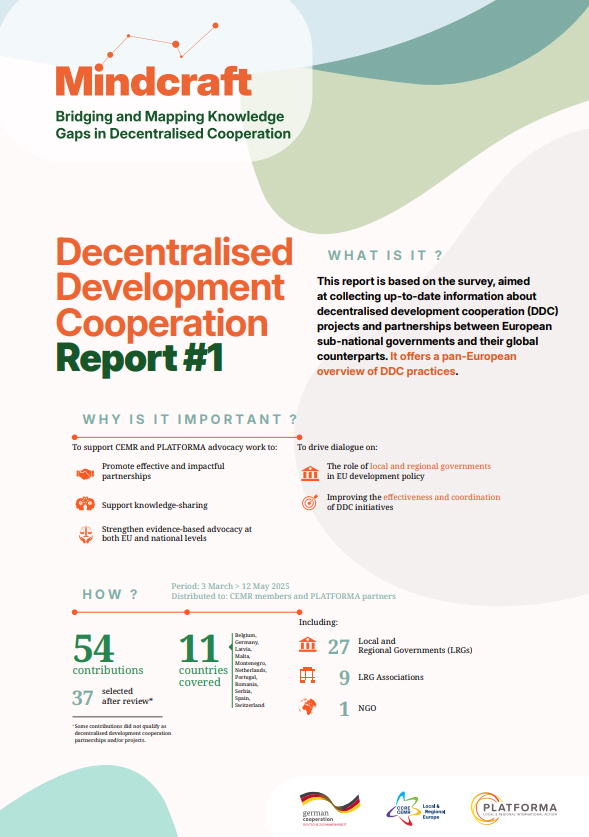
Decentralised Development Cooperation Report #1
The first Decentralised Development Cooperation (DDC) Report provides a unique snapshot of how local and regional governments (LRGs), their associations, and civil society actors engage in international cooperation. Based on a Europe-wide survey), it presents results from 37 contributions from 27 LRGs, 9 associations, and 1 NGO across 11 countries. Read the full Mindcraft DDC Report #1, available in English, French, Spanish, and German. This report is produced within the Bridging and Mapping Knowledge Gaps in Decentralised Cooperation (Mindcraft), funded by the German Federal Ministry for Economic Cooperation and Development (BMZ) and supported by the Deutsche Gesellschaft für Internationale Zusammenarbeit (GIZ).
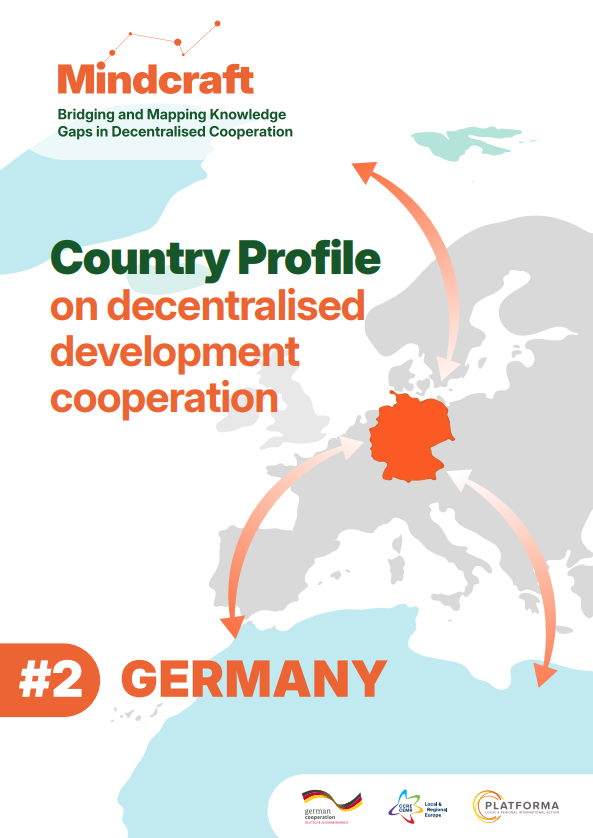
Country Profile on decentralised development cooperation: the case of Germany
Where does Germany stand when it comes to decentralised development cooperation (DDC)?
The country profiles offer a short overview of national models of (decentralised) development cooperation frameworks in selected EU Member States. The aim is to provide insights into specific mechanisms and modalities of analysed national frameworks and identify enabling factors as well as challenges related to practical implementation, focusing on the role and opportunities for local and regional governments and their associations.
Read the Country Profile, available in four languages: English, French, German, Spanish.
This publication is produced within the Bridging and Mapping Knowledge Gaps in Decentralised Cooperation (Mindcraft), funded by the German Federal Ministry for Economic Cooperation and Development (BMZ) and supported by the Deutsche Gesellschaft für Internationale Zusammenarbeit (GIZ).
European territories localise the SDGs | Getting local SDG actions onto the fast track
Discover the 8th edition of our annual study on the localisation of the Sustainable Development Goals (SDGs).
This year marks the passing of several key achievements of global significance: the 10-year milestone of the Paris Agreement on climate change and the adoption of the Sustainable Development Goals (SDGs), as well as the 30th anniversary of the Beijing Declaration advancing women’s rights.
Global agendas operate in parallel, which means that crucial big picture connections need to be continually made if the SDGs are to be optimally achieved on the ground, and this can only be done by keeping the subnational level involved throughout this process.
Click here to download the full pdf of the study.
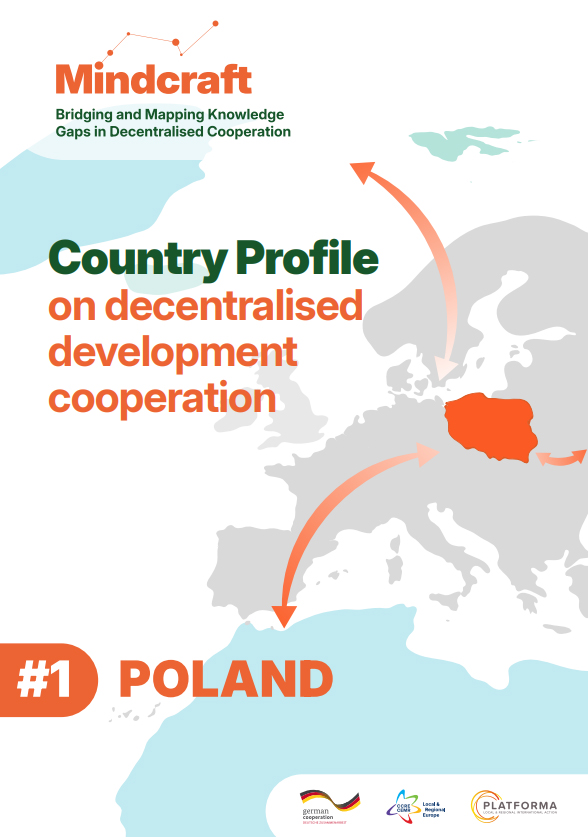
Country Profile on decentralised development cooperation: the case of Poland
Where does Poland stand when it comes to decentralised development cooperation (DDC)?
The country profiles offer a short overview of national models of (decentralised) development cooperation frameworks in selected EU Member States. The aim is to provide insights into specific mechanisms and modalities of analysed national frameworks and identify enabling factors as well as challenges related to practical implementation, focusing on the role and opportunities for local and regional governments and their associations.
This publication is produced within the Bridging and Mapping Knowledge Gaps in Decentralised Cooperation (Mindcraft), funded by the German Federal Ministry for Economic Cooperation and Development (BMZ) and supported by the Deutsche Gesellschaft für Internationale Zusammenarbeit (GIZ).
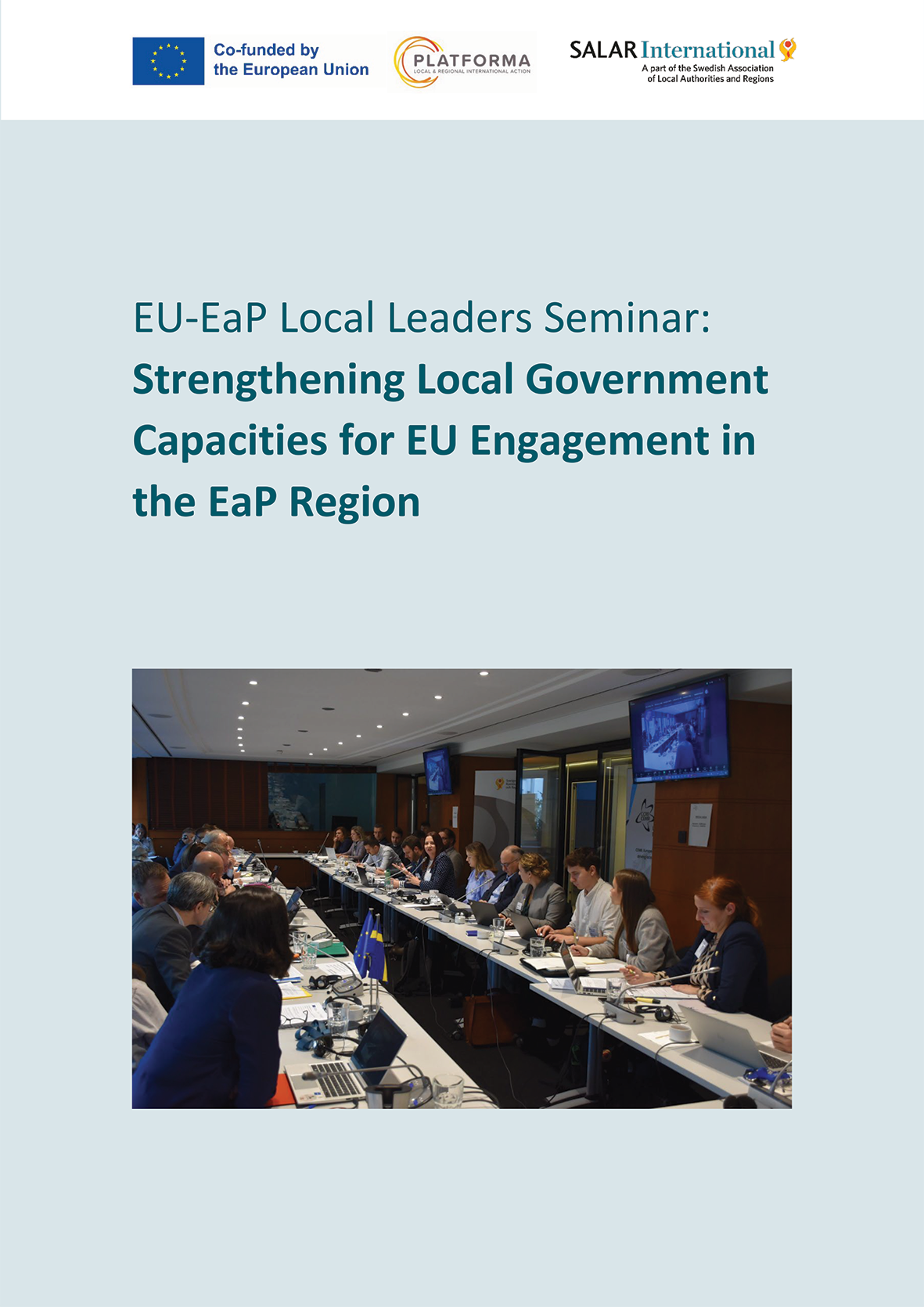
EU-EaP Local Leaders Seminar: Strengthening Local Government Capacities for EU Engagement in the EaP Region
Local government associations (LGAs), EU institutions, think tanks, NGOs and senior national representatives (including Moldova’s EU Ambassador and the Deputy Head of Ukraine’s Mission to the EU) gathered in Brussels on 28 November 2024 for a seminar on engagement of local governments in EU integration. In focus were Georgia, Moldova and Ukraine as (with candidate status for the former and the opening of accession negotiations in the latter two) these countries move from the EU’s ‘Neighbourhood’ to the ‘Enlargement’ zone. Representatives from other candidate countries in the Western Balkans were also on hand to share their experience, and perhaps draw some inspiration themselves.
European Territories Localise the SDGs | The time for impact is running out
Discover the 7th edition of our annual study on the localisation of the Sustainable Development Goals (SDGs). Only 15% of the SDGs are on track. And according to the OECD, 65% of SDG targets depend on local and regional efforts.
Therefore, empowering local governments with the necessary resources and decision-making power is vital: successful effective SDG policies call for a decentralised, bottom-up, territorial approach.
This year promises to be especially relevant as the Summit of the Future being held in September will give all actors the opportunity to come together to address our global challenges.
Click here to download the full pdf of the study.
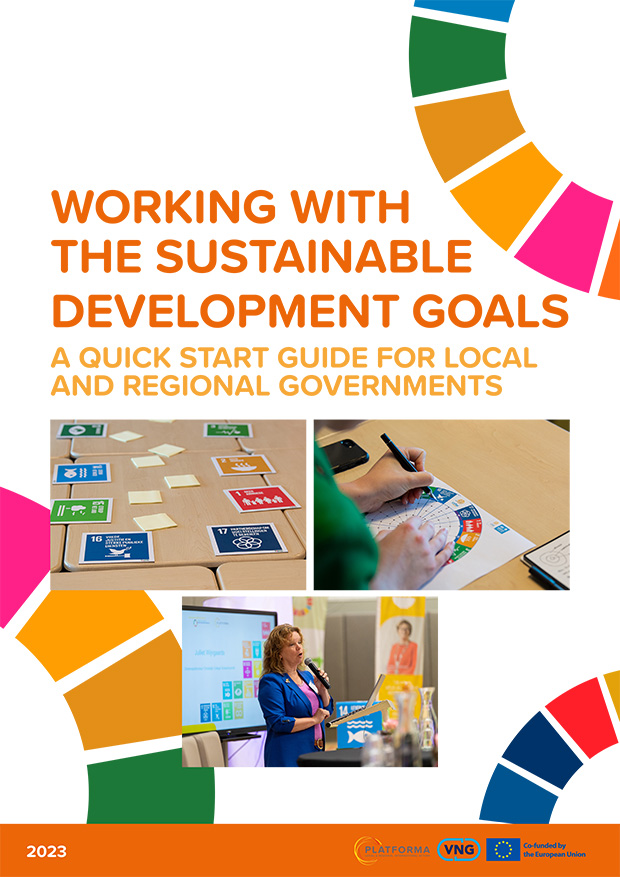
Working with the Sustainable Development Goals: a quick guide for local and regional governments
This interactive guide is a practical tool for any LRG wanting to start their journey on the SDGs. The SDGs, established in 2015 by the United Nations, cannot be achieved without the effort of LRGs. Many core themes within the SDG agenda are themes in which LRGs already take an important role. The SDGs offer a different viewpoint on creating impact on these issues, which can benefit local governments. Therefore, this interactive guide aims to provide a quick overview of information for local governments to start working with the SDGs.
Walking towards a feminist local future
This publication aims at identifying the main reflections, issues and questions that apply to public policies and feminisms, which may be useful not only to specialised politicians and experts on the subject, but to anyone who is interested in including this perspective in local public policies, or in their public or private initiatives.
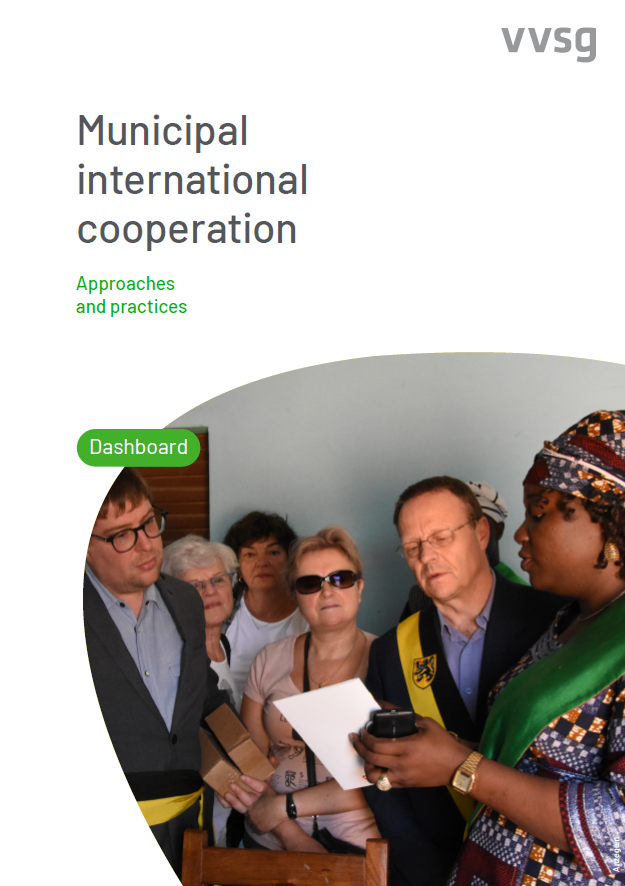
Municipal international cooperation | Approaches and practices | Dashboard
So you want to become internationally active as a local government and are looking for suitable forms of global cooperation? This dashboard can help you. It provides an overview of existing forms, approaches and practices. Each approach is briefly described with a definition and some characteristics, such as the added value for local government, participation, duration and budget. In addition, some good practices are given for each approach.
European Territories Localise the SDGs | Only six summers left to make the most of the Decade of Action
“We are fast approaching the halfway point on the road to the 2030 Agenda and the implementation of the Sustainable Development Goals (SDGs), meaning there are only six summers left! The year 2023 therefore represents a critical milestone in determining the path to take stock of the remaining time, with many substantial challenges ahead, as well as significant opportunities that must not be overlooked.”
CEMR President Gunn Marit Helgesen
Rethinking decentralised cooperation in a context of uncertainties and multiple transitions
“Over the last few years, we have become accustomed to living with words that define new concepts and situations that we could not have imagined when we presented the last study by the European Union-Latin America Decentralised Cooperation Observatory, resulting from the 7th Annual Conference held in 2019. Today, terms such as the so-called new normal, pandemic, COVID-19, lockdown, collapse, complex emergencies or multiple transitions are used on a daily basis all over the world. We are witnessing an unprecedented multiple crisis that, due to its global and multidimensional scope, exceeds all limits, shaking the foundations on which our societies have been built in recent decades.”
Pilar Díaz Romero, Deputy to the Presidency and Delegate for International Relations of Diputació de Barcelona
The SDGs in the Development Cooperation Policies of the Spanish Autonomous Communities
The main aim of the report is to analyse the impact of the Sustainable Development Goals (SDGs) on the development cooperation policies of the Spanish autonomous communities, with special emphasis on strategic planning processes and dialogue with other public policies. More broadly, it also aims to examine the position and role of development cooperation in regional strategies for the 2030 Agenda (or localisation of the SDGs). Given its inclusion in the PLATFORMA project, the need to prepare a questionnaire-based analysis methodology that could be used in other European contexts was also identified.
Decentralized Cooperation to localize the SDGs in Europe
Based on the general characteristics of the frameworks in which European de centralized partnerships operate, this document, organized in a similar way to the Trainers’ Workshop process of Module 4, provides some more details on the reality and diversity of DC in the EU, always with the SDGs as a point of reference.